Oh dream, why do you do me this way? Again, with the digging, again with the digging up.Once more with the shovels.Once more, the shovels full of dirt.The vault lid. The prying. The damp boards.Mother beside me.Like she’s an old hat at this. Like all she’s got left is curiosity.Like curiosity didn’t kill the red cat.Such a sweet, gentle cat it was.Here we go again, dream.Mother, wearing her take-out-the-garbage coat.I haven’t seen that coat in years.The coat she wore to pick me up from school early.She appeared at the back of the classroom, early.Go with your mother, teacher said.Diane, you are excused.I was a little girl. Already a famous actress.I looked at the other kids. I acted lucky.Though everyone knows what an early pick-up means.An early pick-up, dream.What’s wrong, I asked my mother. It is early spring.Bright sunlight. The usual birds. Air, teetering between bearable and unbearable.Cold, but not cold enough to shiver.Still, dream, I shiver. You know, my mother said. Her long garbage coat flying.There was a wind, that day. A wind like a scurrying grandmother, dusting.Look inside yourself, my mother said. You know why I have come for you.And still I acted lucky. Lucky to be out.Lucky to be out in the cold world with my mother.I’m innocent, I wanted to say. A little white girl, trying out her innocence.A white lamb, born into a cold field.Frozen almost solid. Brought into the house. Warmed all night with hair dryers.Death? I said. Smiling. Lucky.We’re barely to the parking lot.Barely to the car ride home.But the classroom already feels like the distant past.Long ago, my classmates pitying me.Arriving at this car full of uncles.Were they wearing suits? Death such a formal occasion.My sister, angry-crying next to me.Me, encountering a fragment of evil in myself.Evilly wanting my mother to say it.What? I asked, smiling. My lamb on full display at the fair.He’s dead! my sister said. Hit me in the gut with her flute.Her flute case. Her rental flute. He’s dead!Our father.Our father, who we were not supposed to know had been dying.He’s dead! The flute gleaming in its red case.Here, my mother said at home.She’d poured us each a small glass of PepsiWe normally couldn’t afford Pepsi.Lucky, I acted.He’s no longer suffering, my mother said.Here, she said. Drink this.The little bubbles flew. They bit my tongue.My evil persisted. What is death? I asked.And now, dream, once more you bring me my answer.Dig, my mother says. Pry, she says.I don’t want to see, dream.The lid so damp it crumbles under my hands.The casket just a drawerful of bones.A drawerful. Just bones and teeth.That one tooth he had. Crooked like mine.
Feature Date
Series
- What Sparks Poetry
Selected By
Share This Poem
Print This Poem
“Ballad” from Modern Poetry by Diane Seuss.
Published by Gray Wolf Press in March 2024.
Copyright © 2024 by Diane Seuss.
All rights reserved.
Reproduced by Poetry Daily with permission.
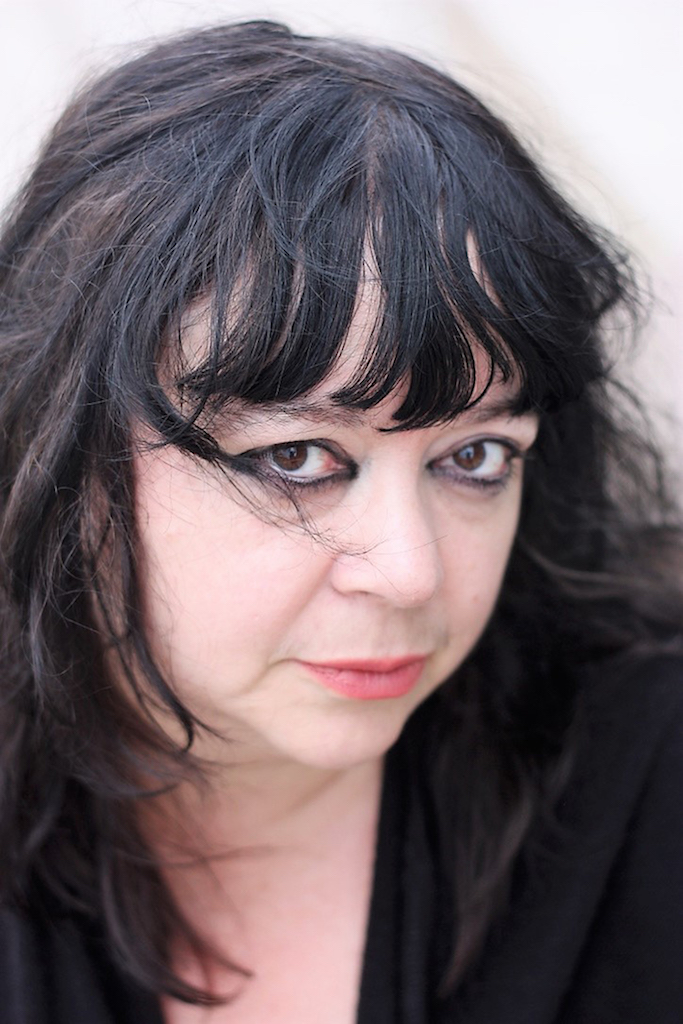
Diane Seuss’s most recent collection is Modern Poetry (Graywolf Press 2024), currently a finalist for the National Book Award. frank: sonnets (Graywolf Press 2021) was the winner of the Los Angeles Times Book Prize, the PEN Voelcker Award, the National Book Critics Circle Award, and the Pulitzer Prize. Four-Legged Girl (Graywolf Press 2015) was a finalist for the Pulitzer Prize. Seuss was a 2020 Guggenheim Fellow. She received the John Updike Award from the American Academy of Arts and Letters in 2021. She was recently elected to the Academy of American Poets Board of Chancellors. Seuss was raised by a single mother in rural Michigan, which she continues to call home.
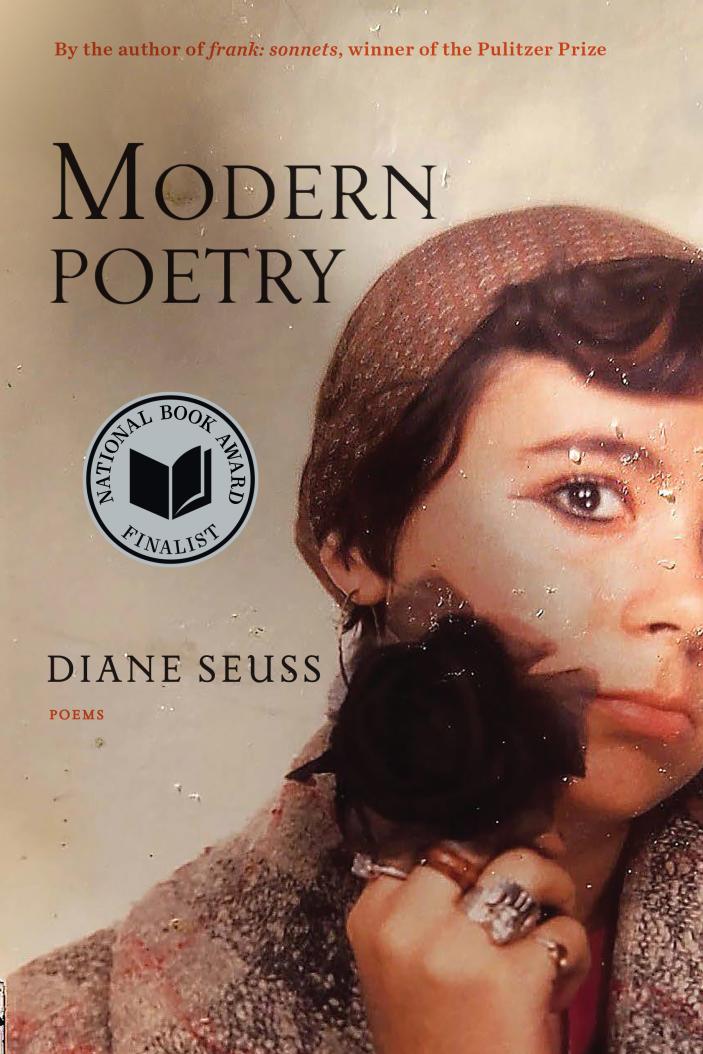
“Diane Seuss’s superb Modern Poetry is no mere survey; it’s a full-frontal seminar on the subject. In these forty-one fiery poems, Seuss takes a deep dive into our inheritance from the Romantic and Modernist lyric poets, like Keats and Hopkins, through Stevens and Plath, ‘the final modern poet.’ Her sizzling (and often funny) task is to insist on the radical differences she savors from those earlier custodians of the melancholy sublime, where Beauty was writ large and meaning can still seem like an academic exercise—or mere fog. The truth in Seuss’s world is gritty, with dirt on its hands, determined by a self-assertive resistance to the Romantic ideal. For every ‘Aria,’ ‘High Romance,’ and ‘Villanelle,’ she counters with a ‘Cowpunk’ and ‘Little Fugue with Jean Seberg and Tupperware.’ She shows us that class, region, race, gender—those identifying features—are not things to be solved or resolved in some transcendental razzmatazz but accepted, embraced. Seuss exposes the falsity of idealized love, of academic coziness, and the grandeur of sublimity by a self-deprecating humor that morphs time and again into a wily, powerful, self-valuing gift.”
—David Baker

Poetry Daily Depends on You
With your support, we make reading the best contemporary poetry a treasured daily experience. Consider a contribution today.