Dual Time

Hwang InChan
Translated from the Korean by Eun-Gwi Chung

It was when we walked together through the park.I was in front of the fountain in a Korean Central Park.You were passing the fountain in Central Park.You were standing in the park in the middle of the day,I was caught in the dark.A woman out with a dog lost the dog.Then a bike fell over in the same place.We were walking together through the park.When a woman’s scream rang out at that very momentI looked at the growing darkness and thought,What is it, this warmth of the halves holding each other?Suddenly a light came on in a streetlamp.As I say, “It’s dark,” in Korean,you say, “It’s dark,” in English. 

듀얼 타임

그것은 함께 공원을 걸을 때의 일이었다나는 중앙공원의 분수대 앞에 있었다너는 센트럴 파크의 분수대를 지나갔다네가 한낮의 공원에 서 있으면나는 어둠에 붙들리고개를 데리고 나온 여자가 개를 놓쳤다그러자 그곳에서 자전거가 쓰러진다우리는 함께 공원을 걷고 있었다여자의 비명이 동시에 들려올 때점점 짙어지는 어둠을 보며 나는 생각했다무엇일까, 마주잡은 반쪽의 따뜻함은갑자기 가로등에 불이 들어왔다내가 어둡다, 말하자네가 It’s dark, 말한다

Feature Date

Series

Selected By

Share This Poem

Print This Poem

Hwang InChan

Hwang Inchan’s poetry was first published in 2010 in the pages of Hyundae Munhak. His works include the poetry collections Washing a Myna, Heejee’s World, Repetition for Love’s Sake, You Have Reached the End of the Future, and Let’s Call This My Heart, and the prose collection Reading Sadness, Speaking Love. He has been awarded the Kim Su-young Literary Award and Hyundae Munhak Award among others.

Eun-Gwi Chung earned her PhD in poetics from the University at Buffalo and is a professor at Hankuk University of Foreign Studies in Seoul, South Korea. Her translations of poetry have been published in more than thirty books to date, including Washing a Myna (2024).

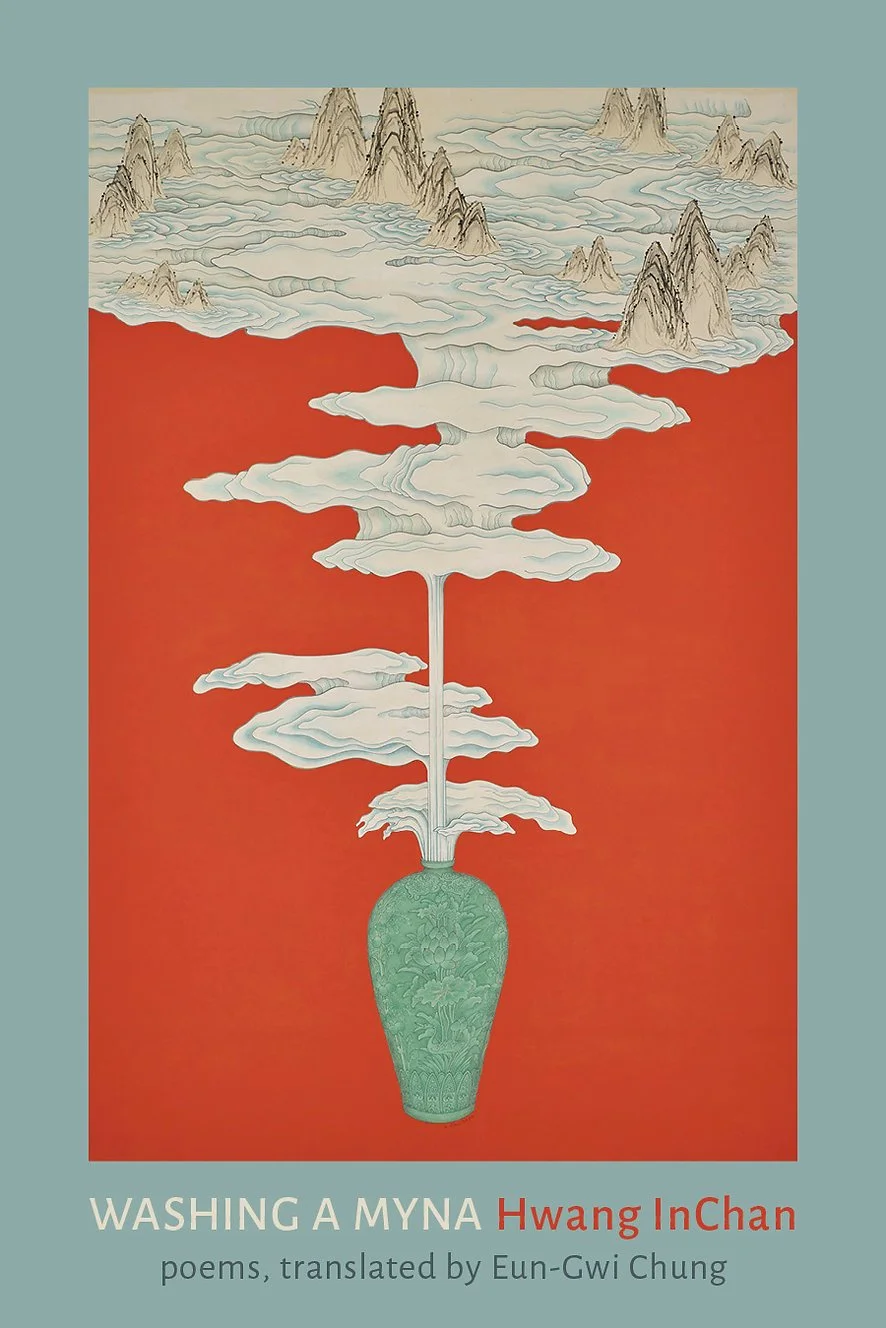
Washing a Myna
Black Square Editions

New York, New York

Hwang provides us with a new poetic experience through the method of washing the language away, not putting clothes on it. A rare craftsman, he wields an art of erasure, dissolving myriad artistic forms. When the way of saying “just” becomes not an aesthetic oblivion but a poetic will, his poetry washes our eyes. For Hwang, the poetic method of “defamiliarization” is not merely a technique, but a world itself. In the defamiliarization of the familiar, the silence of the lost voice awakens beyond the bound of human voice. His poem is a poem of silence, a venture taking a step beyond quiet’s veil.
Kim Haengsook

Poetry Daily Depends on You

With your support, we make reading the best contemporary poetry a treasured daily experience. Consider a contribution today.