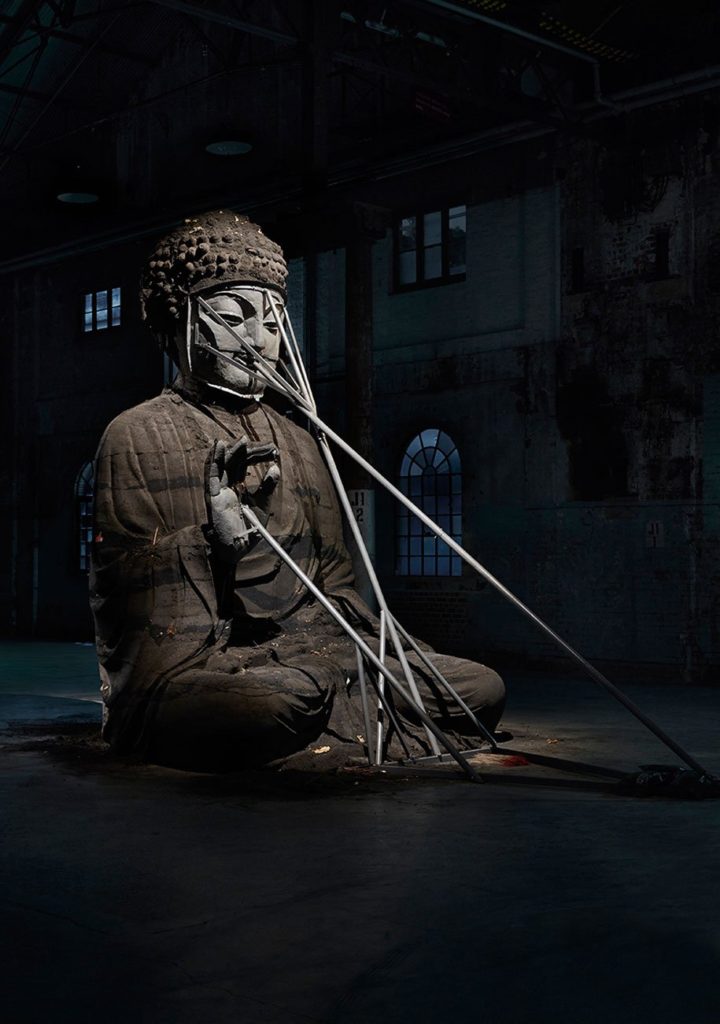
The central object in my poem “Ash” is a sculpture by the Chinese performance artist, painter, photographer, and sculptor, Zhang Huan. The work is a large Buddha cast from the incense ash “imbued with the prayers of untold worshippers collected from temples around China.” * As visitors approach the sculpture, the vibration of their feet on the gallery floor, their movements, even their breathing, lead to the slow crumbling and collapse of the work itself. The figure takes on a sense of the sublime and of the divine not so much from its scale, but from its impermanence. Its object-hood, its this-ness, is at every moment in the process of disintegration. If the ash is “imbued with prayer,” what about the smoke released from the joss sticks? Is the ember imbued with prayer that turned it all to ash and smoke? Are prayers released as the ash Buddha gives way under its own weight, gives into gravity? Is there a moment—in its fresh-cast-ness or in its emptying—when the Buddha is more wholly Buddha? My poem attempts, I hope, to confront these questions, not answer them.