If anyone in your global city still holds me, exile, in memory,Know that I died as soon as they read out the sentence.I live dead, walk around dead, wear out the remains of my body,My becoming body, dry flesh on dry bones.Here I am an alien, barbarian, non-native speaker,Idler with time on his hands and signs of time on his hair,Local addresses escape me, I forget the words that I study,Just consonant clusters, no vowels for poetry.What can I talk about so as not to bore you? HorsesSlip on hard rivers, arrows hit targets, philosophy is stupid.Fish stick out of the ice with mouths agape,Too much air for them, too little ear for me.Wine frozen overnight, it stands by itself, the vessel in shards,I chop a piece off and suck on it like an infant.Tawny, wrinkled apples at the market look like shrunken heads.Locals: faces only a barber can love. Beards and hair over fur.Fir-tall, they point at my toga, make shiveringGestures. Even the stars look down on me. Если у вас в мегаполисе ещё помнят обо мне, ссыльном,Знай, кто спросит: я умер, едва приговор огласили.Мёртвый живу, хожу, тело донашиваю,Оно послушное – ссыхается на костях.Я здесь чужак, варвар, языка не носитель,Неба коптитель, волосы стали белые,Мёртвыми губами учу гетскую грамоту,Мёртвыми ногами топчу твёрдую воду.Что тебе рассказать, чтоб не скучала? СкачутКони по гладкой реке, и стрелы летают,Рыбы торчат изо льда с открытыми ртами,Некому их вынимать. Некому меня понимать.Вино замёрзло, стоит само без кувшина,Кусок вина отломлю и сосу, как сиську.Яблок не достать. Ты бы меня не узнала.Местные замотаны в шкуры, на тогу косятся,Только лица и видно, да и те в бороде.Даже звёзды здесь не как у людей.
[If anyone in your global city holds me,]
Feature Date
Series
- Translation
Selected By
Share This Poem
Print This Poem
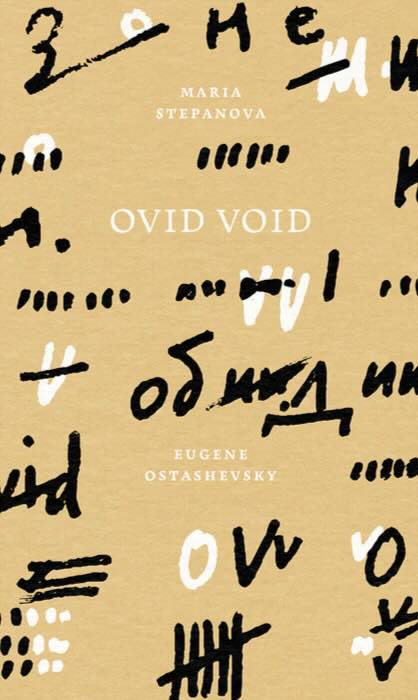
“[If anyone in your global city holds me,…]” from OVID VOID: by Maria Stepanova.
Published by World Poetry Books on May 9, 2025.
English Copyright © 2022 by Eugene Ostashevsky.
All rights reserved.
Reproduced by Poetry Daily with permission.

MARIA STEPANOVA (born in Moscow in 1972), poet, essayist and editor, is the recipient of several Russian and international literary awards, including the Leipzig Book Prize for European Understanding. Her poems have been translated into a number of languages, including English, German, French, Italian and Swedish. Her documentary novel Pamiati pamiati (In Memory of Memory) came out in Russian in 2017 and received the Russian Big Book Prize. The book was translated into 29 languages, shortlisted for the International Booker Prize and Prix Médicis, longlisted for the National Book Award, and received the French Prix de Meilleur Livre Étranger. As of 2022, Maria Stepanova lives in Berlin.

"Praised by the British newspaper the Guardian as “Russia’s next great writer” and “a writer who will likely be spoken about in the same breath as Poland’s Olga Tokarczuk and Belarus’s Svetlana Alexievich in years to come,” Stepanova in fact persistently eludes any attempt to pin her down to a trend or typology. She is at once classical and experimental, modernist and postmodernist. She is equally intuitive and rational, both intellectually and emotionally sensitive."— from ALL THE WORLD ON A PAGE: A CRITICAL ANTHOLOGY OF MODERN RUSSIAN POETRY.
The Roman poet Ovid wrote his last poems while exiled by Augustus to a border settlement on the Black Sea. The Russian poet Maria Stepanova condensed and paraphrased Ovid’s poems of exile during the winter of the pandemic, which she spent in the countryside outside Moscow. The American poet Eugene Ostashevsky responded to Stepanova’s versions of Ovid as they were being written, from his quarantine in Shanghai. The poets’ bilingual “conversation” violates the distinction between translation and the original in order to describe some of the forms that empire and exile may assume in the modern world.

Poetry Daily Depends on You
With your support, we make reading the best contemporary poetry a treasured daily experience. Consider a contribution today.