On Translating and Retranslating Ahmad Shamlou
We usually measure creative progress by what we make next. Sometimes the clearest evidence is in a remaking. Emily Wilson is translating The Odyssey again from scratch. Her decision has brought renewed attention to a question translators know well: when is a translation finished? And for how long can I keep fine-tuning?!
We translators privately know: publication doesn’t necessarily mean an artistic puzzle has been settled forever. Sometimes, a translation is “done” because a publisher or editor is taking it out of your hands. There’s a print date. A translation may be published, but the translator keeps developing. And so can the translation.
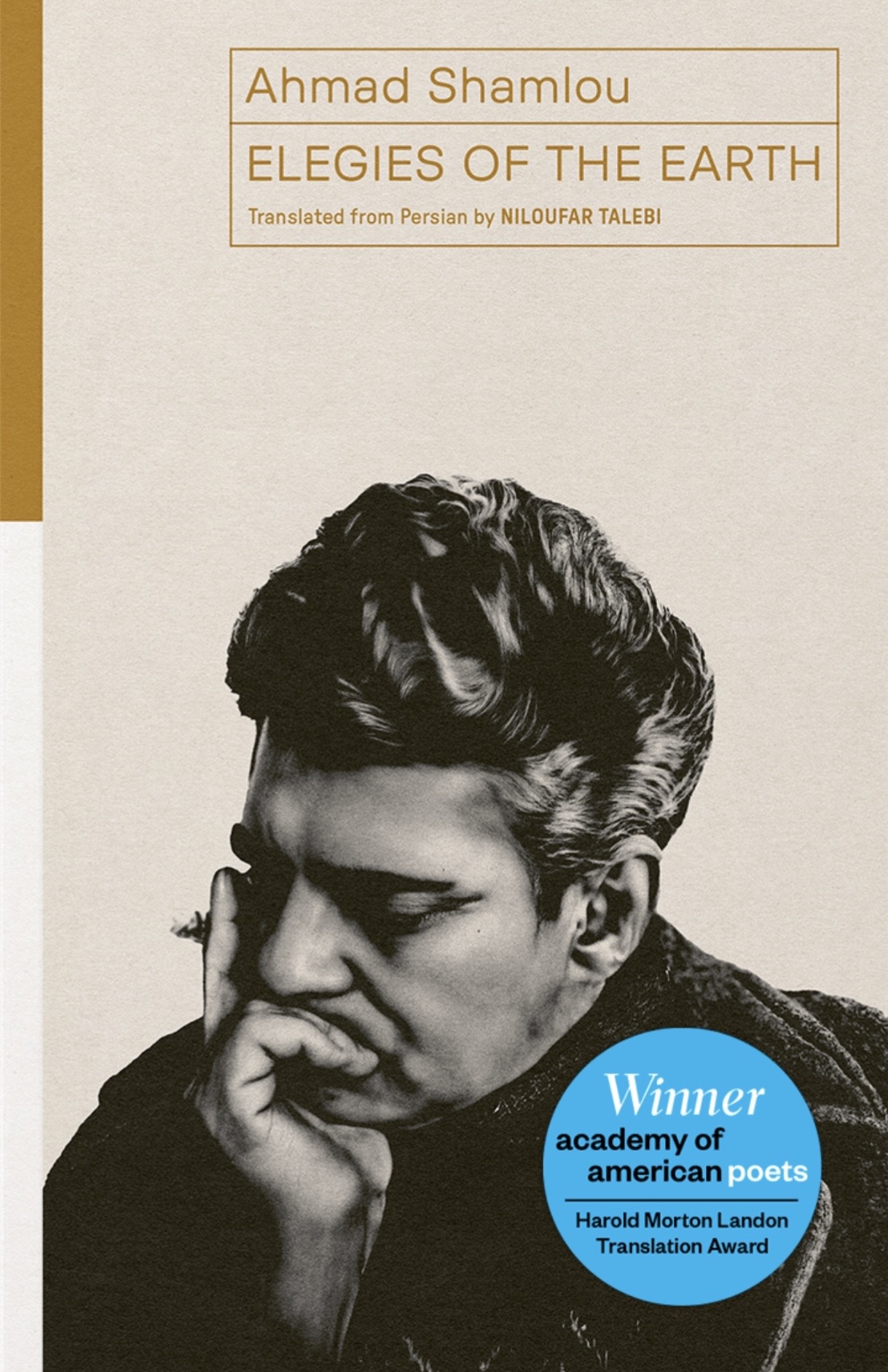
Several years ago, I planned my own opportunity for retranslation. In 2019, I published translations of thirty poems by Ahmad Shamlou in my hybrid memoir, Self-Portrait in Bloom (l’Aleph, 2019). The memoir is a time machine, and those translations are now artifacts of a much longer apprenticeship. Elegies of the Earth: Selected Poems by Ahmad Shamlou (World Poetry Books, 2025) records their afterlife six years later, with eighty poems, including those earlier thirty. Nearly every one got a glow up of some sort—changed words, rhythm, interpretation.
One title went from “Rupture” (which I still love and have translators’ remorse for changing it) to “The Chasm.”
This verse went from:
In me lived a cruel prisoner
unable to adapt to the song of his chains—
I came into being with your first gaze.
To:
In me lived a cruel prisoner
long deaf to the sound of his chains—
until your first glance brought me to life.
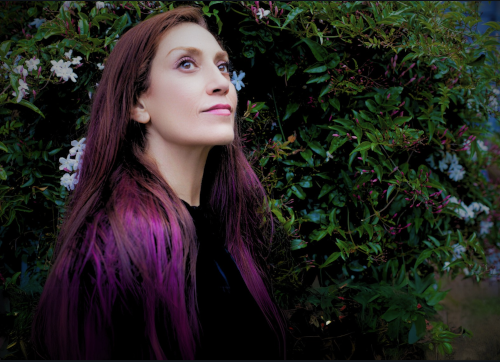
That apprenticeship began in 2012, when I started studying Shamlou’s work toward translations and other projects. I worked on those first thirty poems while writing my memoir that was also about him, our intersecting lives, and his role in my artistic growth. I also harnessed his imagery and metaphors in the opera Abraham in Flames (composer Aleksandra Vrebalov). This was creative bliss: building two different worlds from the same store of images and ideas, each feeding the other.
I’m often asked what my process was, how I decided what a word, line, or poem meant, and how I chose one version to represent it. The answer isn’t always certainty. Late in the process, I often had two or three versions I’d have been happy to print. At some point, choosing becomes an act of letting go.
The creative process is usually invisible and mysterious. Maybe this is why we love makeover shows: we get to see the nitty gritty of the transformation, not only the reveal.
Thankfully, my two books are public artifacts of that transformation, snapshots of how the 2019 translations morphed into the 2025 ones. Between those two published markers sit hundreds of drafts—an archaeological record of creative decision-making. Here’s the progression of the last stanza of “Aida in the Mirror”: where the translation began, ended, and some of the choices it lived through in between.
Artifact 1 — Self-Portrait in Bloom (March 2019)
I searched for a lifetime in the mirror
until you appeared in it.
I cried pools and oceans,
oh you fairy-like in human mold
whose body burns only in the fire pit of falsehood!
Your presence is a heaven
that justifies escape from hell
an ocean that engulfs me
to wash me clean
of all sins and lies.
And dawn awakens by your hands.
Draft #27 — November 23, 2024
I stared in the mirror for a lifetime
waiting for you to appear
I wept pools and oceans,
O, fairy-like being in human form
whose body burns only in the fire of falsehood!
Your presence is a paradise
that justifies the flight from hell,
a sea that swallows me
to wash me clean/to cleanse me
of my sins and lies./of every sin and lie.
And dawn (a)wakes with/in your hands.//
And dawn breaks in your hands//
And dawn awakens in your hands.
Draft #30 — Mid-December 2024
Waiting for you to appear,
I stared in the mirror for a lifetime
I wept pools and oceans,
O, fairy-like creature in human form
whose body burns only
in the flames of falsehood!
Your presence is a paradise
that justifies the flight from hell,
a sea that swallows me
to wash away
my sins and lies.
And dawn awakens in your hands.
Artifact 2 — Elegies of the Earth (November 2025)
Waiting for you to appear,
I stared into the mirror for a lifetime,
weeping pools and oceans.
O, fairy-like creature in human form,
whose body burns only in the flames of falsehood!
Your presence is paradise
justifying the flight from hell,
a sea that swallows me whole
to wash away my sins and lies.
And dawn awakens in your hands.
I hope showing this kind of record becomes more usual. Rather than concealing earlier versions as imperfect things superseded by an authoritative new version, we might preserve and sometimes publish them. Then readers could see not only the artifacts, but the afterlife of a work: the mind at work across time.
The same pleasure exists in reading different translators comparatively. Put versions side by side and our engagement with the original goes supersonic: we glimpse more of what the original language might have carried and the complex choices each translator made in rendering it, while something normally invisible becomes visible—the creative process itself.