Poem with Corpse Flowers & No Corpses

José Olivarez
Translated from the English by David Ruano González

in conversation with
Alan Chazaro & Kim Sousa

Hundreds line up for blooming “corpse flower” at abandoned East Bay gas station.
—The Mercury News, May 20, 2021

begin with the mourning breath of the corpse
flower. consider what rots might feed the veins.
alternatively: all vanity requires stink.
on the other end of the best steak of your life
is a cow moaning a song of agony.
somewhere there is a producer flipping that cow’s
last word into something that can hold a snare drum.
one of the first questions our ancestors had to answer
was what to do with the ones who die.
at some point, they started feeding the dead
back to the ground & naming babies after them.
so when a corpse flower opens up
in an Alameda gas station its a minor miracle:
not a Warriors game, or a funeral or a wedding
but the whole block gathered to watch a flower
remind us of our family—not dead
& not gone—ready to bloom again.

Poema con flores cadáver & sin cadáveres

en conversación con
Alan Chazaro & Kim Sousa

Cientos hacen fila para ver florecer a la “flor cadáver” en la gasolinera abandonada de East Bay.
—The Mercury News, 20 de mayo de 2021

empieza con el aliento de luto de la flor
cadáver. considera qué putrefacción podría alimentar las venas.
alternativamente: toda vanidad requiere apestar.
en el otro extremo del mejor filete de tu vida
hay una vaca gimiendo una canción de agonía.
en algún lugar hay un productor que convierte la última palabra
de esa vaca en algo que puede retener un tambor.
una de las primeras preguntas que nuestros ancestros tenían que responder
era qué hay que hacer con aquellos que mueren.
en algún punto, comenzaron a alimentar a los muertos
de vuelta a la tierra & nombraron a los bebés igual a ellos.
así que cuando una flor cadáver se abre
en una gasolinera de la Alameda es un pequeño milagro:
no era un juego de los Warriors, ni un funeral, ni una boda,
sino que toda la cuadra se reunió para mirar una flor
que nos recuerda a nuestra familia—no la muerta
ni la que se ha ido—lista para florecer de nuevo.
Feature Date

Series

Selected By

Share This Poem

Print This Poem

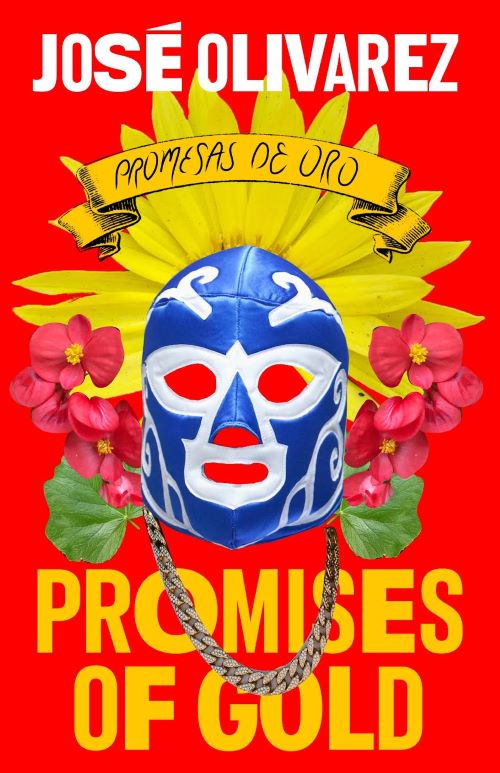
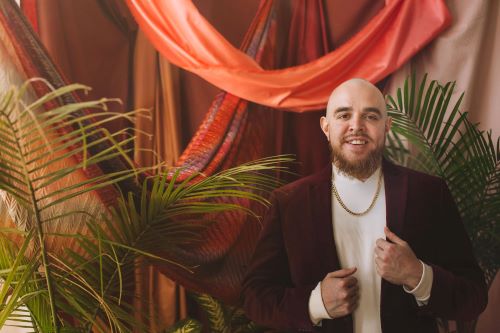
José Olivarez is the son of Mexican immigrants, and the author of two collections of poems. His second collection, Promises of Gold, was long listed for the 2023 National Book Awards. His debut book of poems, Citizen Illegal, was a finalist for the PEN/Jean Stein Book Award and a winner of the 2018 Chicago Review of Books Poetry Prize. Along with Felicia Rose Chavez and Willie Perdomo, he co-edited the poetry anthology, The BreakBeat Poets Vol. 4: LatiNEXT. Alongside Antonio Salazar, he published the hybrid book, Por Siempre. José Olivarez received a 2025 Individual Artist Fellowship award from the New Jersey State Council on the Arts. He lives in Jersey City, NJ.

Photo:
Harrison Martin

David Ruano González is a Mexican poet, translator, and cultural manager based in Mexico City. He was a poetry fellow at the Foundation for Mexican Literature (2014–2015). In 2019, he founded Melancholy of Forgotten Tapes, an independent label/publishing company that publishes poetry books accompanied by sound elements in cassette form and whose first project was Mixtape, of his own authorship. Ruano is currently part of MAKE’s Lit & Luz Festival organization and publishes his own translations on his personal blog medoriorules.medium.com.

“Glistening. . . . Olivarez elevates small but notable moments through a sensitive, introspective speaker who must learn tough lessons on the streets of Calumet City. . . Bilingual readers will enjoy flipping back and forth to see how the prism of each poem changes its hue in the light of another language.”
—Booklist starred review

“The truth is: Technically, I don’t understand poetry. I never have. I miss everything in it. It’s a language I can’t process. And, for me anyway, that’s what makes Jose special. Because when he writes poetry, I don’t need to understand it—at least, not in the traditional sense—because I FEEL it. I feel his words under my fingertips like velvet. I feel his words in my chest like I’m looking at a painting that moves me in a way I can’t fully explain. And, again, for me anyway, that’s more important.”
—Shea Serrano, bestselling author of Hip Hop (And Other Things)

“Visceral and moving.”
—Kate Baer, #1 New York Times Bestselling author of What Kind of Woman

Poetry Daily Depends on You

With your support, we make reading the best contemporary poetry a treasured daily experience. Consider a contribution today.