Readers Write Back

For National Poetry Month this year, Poetry Daily decided to turn the spotlight onto readers of poetry: who we know are especially important, who, through the power of their attention, collaborate in the making of a poem’s meaning and worth. Which poem, we asked all of you—in our current archive of more than two thousand poems featured on the site since it moved to George Mason University in 2018—made you think, surprised you, moved you, or changed your world just a little? The resulting deep dives and bright finds, which we will feature in our Readers Write Back series during April, give some great recommendations on which poems to check out next, and reveal a wide cross-section of poetry in the contemporary mix. It showed us just how much we could learn from our readers, as well as how poems become an intimate part of lives, have far reaching and unpredictable effects on their readers and, at the least, offer a few minutes of thoughtful, serious reflection in each day.

Our Readers on Poems from Poetry Daily, 2026

Eleanor Thomson
No one in my family immigrated fewer than five generations ago. I’m fluent in the language of my country. But reading Elina Katrin’s “The Crossing of Our Accents,” the barrier between me and a family of Syrian-Russian immigrants vanishes. Katrin calls upon descriptions of the physical experience of speech—“I feel Russian dangling from my tonsils”—to bring the reader alongside the speaker. With her simple but evocative metaphors for life in a foreign language—her father “bending” Russian like “a sledge hammer driving railroad spikes into tracks”—Katrin evokes the comfort of a mother tongue and the violent, beautiful compromise between two languages made by immigrants across the world. “The Crossing of Our Accents” renders cultural differences between the speaker and the reader irrelevant and illuminates the experiences of a family halfway around the world from me!

Xander Graustein
Reading poetry feels comforting in a way that cannot be found as easily in other pieces of writing, especially when a poem talks to the reader directly such as in “The Crossing of Our Accents” by Elina Katrin. When I read poetry, I don’t feel like I’m giving myself to the poem; instead I am only lending an ear similar to helping a friend. The lending of an ear is specifically evoked through the line “You sound like a foreigner” said by her mother in the poem. The phrase hits hard, but I didn’t feel myself wanting to know more, I felt content with what was given. Whereas when you give yourself to a poem, you want to know more, needing clarity, whereas when you are lending an ear. Instead of falling into a world of someone’s desire, you watch from above, not giving or adding.

Read Elina Katrin’s “The Crossing of Our Accents“
 
_________________
 
 
MICHAEL CHANG
Thank you for this convenient excuse to dive into your archives.  The poem I’ve selected is Michael McClure’s “Spring/Fall.” I felt compelled to write about this poem because I think Michael McClure is a tremendously underrated poet, and somebody (I would put Louis Zukofsky on this list, too) who has largely been overlooked by history. I never hear his work discussed in classrooms and other poetic environments.
 
The appeal for me about this poem lies in getting the chance to feel like you’re discovering someone new, a secret poet only you know about—and that’s a big part of the thrill in reading poetry, I think.  Reading this poem, I get the urge to rush and share it with all of my friends.  It has everything I want to see in a poem: interesting form, humor, discrete references pulled from every corner of the universe, a strategic lack of punctuation, run-on phrases that make complete sense . . . a mixed bag in the truest and most fabulous sense of the word, as if everything were thrown into a centrifuge and processed to become this poem.  
 
The poem is also bookended by brilliance.  It begins ‘Shall I put a hairy tail where my head is?’ — I love poems that pull you into their world with such charm and immediacy (‘lure’ perhaps inadequately captures the velocity with which this should happen).  The poem’s ending is also so nice and ties these elements together flawlessly: ‘It is all perfect this is really it.’
 
Read Michael McClure’s “Spring/Fall”  
 
_________________
 
 
Ace Cannon
“Arroz Poetica” by Aracelis Girmay is a poignant literary example of the rebellion I believe is necessary to hold our government accountable. So often, I hear that I should “take the high road,” and give my political leaders grace, even though they’re actively stripping my rights away. I shouldn’t and don’t owe mass murderers my respect or care– especially while my siblings are being sentenced to life in prison for using the bathroom that they belong in, and while Venezuelans and Iranians and Palestinians lose their lives to oligarchs that “wear ball gowns & suits & rings…” and “use words like ‘casualties’ to speak of murder.”
 
Read Aracelis Girmay’s “Arroz Poetica“
 
_________________
 
 
David Vincenti
I enjoy pointing people to Julien Strong’s “Height.” As a poet who is also an accordionist, I love the way Strong uses the language of both sound and sight to subtly connect the distinctive music I love so much to an experience that comes for us all, eventually. I especially like sharing this poem with people who claim to like neither poetry nor the accordion and wait for them to nod in appreciation of, well, at least one of those things. It almost doesn’t matter which.
 
Read Julien Strong’s “Height“
 
_________________
 
 
Tuoyo Palmer
I came to “My Body” by Tanisha Bose with the uneasy recognition that the poem was not speaking about distance, but about proximity—how danger can live in the ordinary act of walking home. What Tanisha Bose achieves is a language stripped of ornament, where even survival feels like a learned behavior rather than a right. The image of holding keys like claws stayed with me—not as metaphor alone, but as lived instruction. What unsettled me most was how the poem collapses childhood into vigilance. Since then, I read it not as a poem, but as testimony.
 

Melodie Ashley
Probably every woman knows all too well the feeling of walking with “keys like claws,” as depicted in Tanisha Bose’s powerful poem. Her words took me back to a time when I was just 12-years-old, and my gym class had a visiting police officer who reviewed such methods of protection with us wide-eyed little girls. For some, the lesson came too late. For others, it would not be enough.

Some of us had developed early, having C- (or even D-) cups before we had even exited elementary school. Some were still flat-chested and awaiting their first menses. It didn’t matter. Any one of us could easily be prey. While the more “buxom” among us were body-shamed and blamed for the unwanted attention, we were also taught that many attacks were only about control—and we were “all just such easy targets.”

I wondered if an officer also visited the boys’ gym class to teach them how to be safe—or to teach them not to be predators. No, instead the boys would have received martial arts training or something similar, without the additional requirement of key-claw prayers or “how to disappear into shadows.” (Martial arts for the girls might actually have been more useful!)

I appreciate when a poet can express so much emotion with just a few words. Bose does this incredibly well with this poem. Her line, “I don’t want to be fearless,” reverberates deep into the psyche of any survivor or any potential victim. We don’t want to have to be fearless. And, while we may not want to be left alone by everyone, we certainly do not want to feel “hunted” everywhere we go. We just want to feel safe in our own neighborhoods, in our own homes, in our own skin—regardless of how much “safety training” or experience we’ve had.

Read Tanisha Bose’s  “My Body“


Share This Post

Print This Post

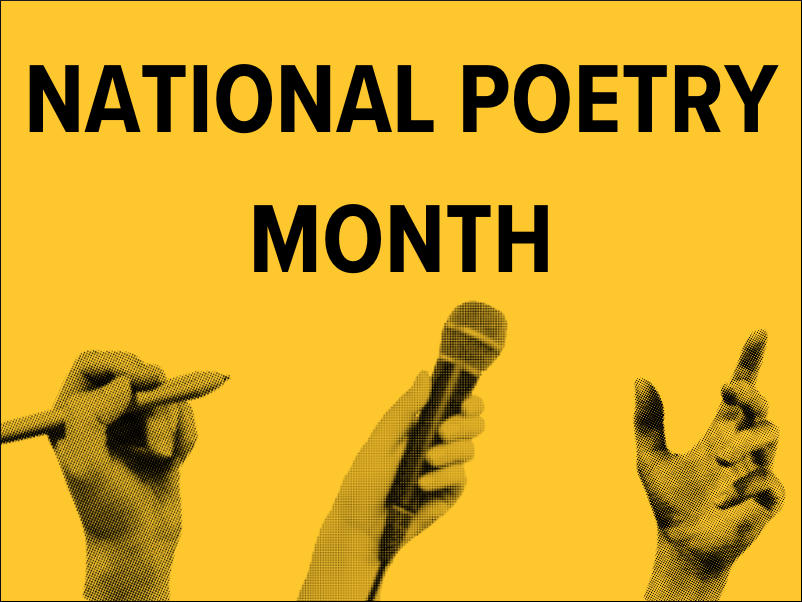
Yellow-and-black graphic advertisment for Poetry Daily's National Poetry Month celebration

Readers Write Back

For National Poetry Month this year, Poetry Daily decided to turn the spotlight on readers of poetry: who we know are especially important, who, through the power of their attention, collaborate in the making of a poem’s meaning and worth.  Which poem, we asked all of you—in our current archive of more than two thousand poems featured on the site since it moved to George Mason University in 2018—made you think, surprised you, moved you, or changed your world just a little?