Night Song

Jessica Fisher

You’ll never know
what became of me
in the dark, how
my body opened, to
what or to whom.
There, the moon
shone with the sun’s
reflected light
and the stars, hidden
by day, blinked their
shy hellos. The long
days of summer, with
its great foliage, its
flocks and herds,
had erased the desire
to be a self alone.
Sometimes on the bus
I felt like a stowaway
in other lives,
looking into the soul
of each passenger.
How, you ask? given that
the soul, if it exists,
cannot be seen, is
like the bird hidden
in the bush, the
air you breathe. You
take it in nevertheless.
I studied their hands,
the laborers headed home,
kids on their way
out for the night. Beneath
the skin, the riverways
that lead to the heart.
I caught their eyes,
held them there awhile.
There was no one
I could not love.
When the wind clattered
through the oak trees,
and the last milkweed
seeds clung to the
wire screen, and the
crickets sang their wild
song at nightfall, I
thought everything was
saying goodbye, that I
should listen more closely.
I wanted to throw
the window open
to that cold, take in
whatever was left outside.
The leaves of the aspen
already so few, though
they are not lonely,
and in the ravine
a net stretched wide
to catch the saw-whet
owls in their migration.
There in the moonlight
I saw one shining,
lured to the snare
by its own call
played back. Later,
under black light, I felt
the rapid heart beating
in my hands, spread
a wing to tell its age,
the dun feathers fluorescing
the color of sunrise
or sunset, the breast
soft as milkweed tufts.
Weighed and banded and
then let go, it flew back
into its anonymous life.
It had survived capture,
was ready to hunt.
The night was dark
as the future, and
very cold. It drove
us inside, but something
stayed with us of
that strange kind,
their eyes like citrine,
their few ounces
nonetheless weight enough
to hold a heart.

What Keeps Us

Poems to Read in Community

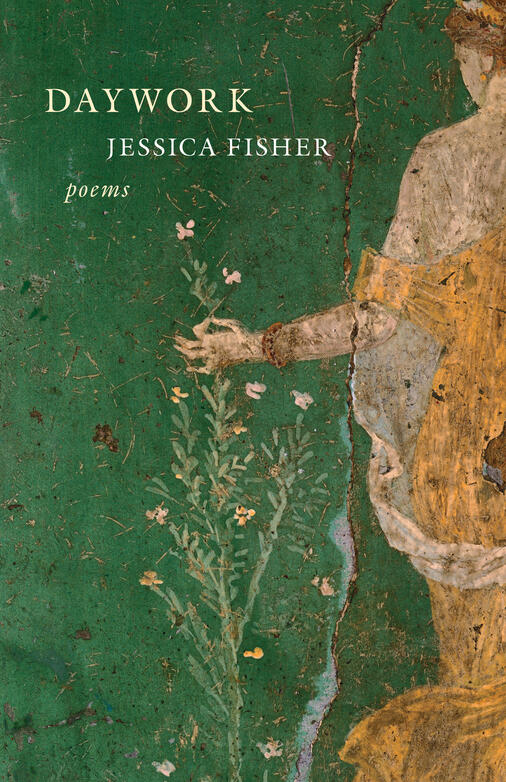
Inspired by C. D. Wright’s poem “What Keeps,” we offer Jessica Fisher’s “Night Song” as part of a twenty-poem selection from poems we’ve featured in 2024—poems, like bread, that one might pass across the table—to a loved one, or to oneself. 

Read editor Lloyd Wallace’s introduction to the collection and statements from our staff readers here. Read poems by selecting below.

What Keeps

Some nights We stay up
passing it back and
forth
between us
drinking deep

Read >

This Era

Forests and cities

along the way sleep like huge dark churches.

Read >

Talisman

each of us bearing the art
in a curve of wing, a small motif
of feather,

Read >

Rewind

Have you ever seen something that buzzes inside you?
I am watching two kids encounter each other

Read >

Rationale

Because she still won’t sleep alone, you sleep deeply
with her small warm body wrapped in your arms.

Read >

Pupusas

no, the pupusa is a portrait
            of this life, crusting & breaking
                        with every lick & tooth

Read >

Psalm III

in what language should I speak to you, sun
so you’ll rise tomorrow for my child, so you’ll
rise and stimulate the growth of our food,

Read >

Night Song

You’ll never know
what became of me
in the dark, how
my body opened,

Read >

Handfuls

Summer is a pure lone mountain.
Somehow, a winter flowers against an enormous blue loneliness

Read >

Eurydice

It snowed the day I died, a freak spring storm.
(It was in the papers.)

Read >

December

Instead of snow, a dark pouring rain
to dodge as passersby reject us.  No spruces, but sycamores with their white cankers.

Read >

Feature Date

Series

Selected By

Share This Poem

Print This Poem

Jessica Fisher is the author of three books of poetry: Frail-Craft, which won the 2006 Yale Younger Poets Prize, Inmost, which was awarded the 2011 Nightboat Poetry Prize, and Daywork, published by Milkweed Editions in 2024. Her poems appear in such journals as The American Poetry Review, The Believer, The Bennington Review, The New Yorker, Tin House, and The Yale Review, and her translations have been published in The New York Review of Books and The Paris Review. She is the grateful recipient of honors including the 2013 Rome Prize, a Holloway Postdoctoral Fellowship in Poetry, and a Hellman Foundation Fellowship. She is an associate professor of English at Williams College and lives with her family in Western Massachusetts.

“How stunning this book of poems—exquisitely intimate, philosophical, meticulous, and sensual. Daywork seems to be salvaged from an inner depth, as though written through a mythically long night. Its sensing, gleaming syntax is at once steadfast and veering. I am astonished by the darkness and the candle (both) of Fisher’s gorgeous, singular mind.”
—Aracelis Girmay, author of The Black Maria

“In lyric meditations that dwell as much in grief as on the work of art—from Michelangelo and Raphael to Helen Frankenthaler and Louise Nevelson—Jessica Fisher refutes the underlying violence of everyday life with parables that tell of the ‘deathlessness of art, the ancient / stories once more transformed—.’ Her horizon is as vast as a fresco wall, even if the world can only be measured in what a day can encompass in lines akin to shadows cast from a hundred sources of light. These stunning poems seek to remember what it was like to be a ‘wire once, conductive, mute,’ compelled to make it ‘matter that we were here at the same time, late capital post-industrial.’ The profound tenors of Daywork so ebb and intensify as to unite the sonic and philosophical registers of intimacy; the understanding that because ‘everything was / saying goodbye, that I / should listen more closely.’”
—Roberto Tejada, author of Why the Assembly Disbanded

“What are the poet’s responsibilities in regards to witnessing and rendering violence? Arriving, like all of us, in the middle of history, Fisher’s speaker reaches toward the fresco and other forms of art in search, if not of answers, then of language that is alive enough to survive its encounters with grief. It is precisely Fisher’s masterful command over the line that allows Daywork to revel in unruliness and to confront, one frame at a time, the beauty and uncertainty of 'what it is to be alive now.'”
—Franny Choi, author of The World Keeps Ending, and the World Goes On

Poetry Daily Depends on You

With your support, we make reading the best contemporary poetry a treasured daily experience. Consider a contribution today.